



Grupa pożarowa NFPA · układy pompowe
Zestaw pomp pożarowych NFPA
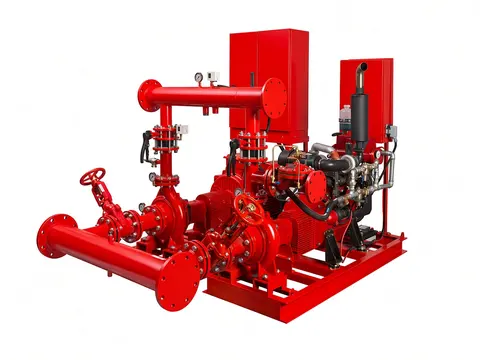
Zestawy pomp pożarowych według NFPA 20 — napęd elektryczny albo dieslem, z pompą jockey, sterownikami i osprzętem.
Udostępnij
What is NFPA?
The National Fire Protection Association (NFPA), founded in 1896 in the United States, is widely accepted worldwide for its publications, programs and standards on fire and occupational safety. Training based on these standards improves practical application on projects.
What is NFPA 20?
NFPA 20 (Standard for the Installation of Centrifugal Fire Pumps) defines specifications, performance and installation rules for fire pumps, pump sets, motor control systems and the ancillary components that must be used.
Desan Engineering dostarcza zestawy pomp pożarowych wykonane według wymagań NFPA 20 dla stacjonarnej ochrony przeciwpożarowej.
Najważniejsze cechy
- Separate controller for each pump
- Shut-off pressure not exceeding 1.4× rated pressure
- At 1.5× rated flow, pressure not less than 0.65× rated pressure
- Suction pipe velocities below 4.57 m/s (15 ft/s)
- Bearings with minimum 5,000-hour service life
- Bronze impeller; shaft AISI 316 or AISI 304; casing GG-25 cast iron
- Sealing with five-ring soft packing in series production
- Electric motor service factor not exceeding 1.15
- Kołnierze DIN 2533 / PN 16 (ssanie i tłoczenie zwykle TS EN 1092-2 / PN 16 na poziomych pompach z wlotem osiowym)
End-suction centrifugal fire pump set
Fire groups are commonly built on horizontal end-suction centrifugal hydraulics: single-stage, volute casing, closed impeller, coupling drive between motor and pump shaft. Soft packing is standard; mechanical seal can be supplied on request. Back-pull-out style access allows seal, shaft, bearings and impeller service without removing the volute from the piping. Rotation is counter-clockwise from the suction side; bearing housing is externally lubricated with an oil sight glass.
Electric motor driven fire pump sets
For maintenance, it is important that the pump can be serviced without full system dismantling. A jockey (leak) pump handles minor system leaks before the main pump starts, avoiding unnecessary main-pump cycles. Where mains power fails and a generator does not start, a diesel-driven fire pump can back up the electric set. Pressure switches support backup sequencing between units. Gate valves are preferred on the suction line; vacuum and pressure gauges monitor suction and discharge. Cooling-related valves on the set are kept closed in normal fire-pump duty. Multi-pump arrangements are typically designed for 100% redundancy so another unit can take over on failure. The fire suppression installation should resist horizontal seismic loads up to 0.5× its weight.
Diesel engine driven fire pump sets
In fire prevention systems, pumps are often used with 100% redundancy, and many sets are diesel-engine driven. NFPA 20 determines when an engine-driven pump is required. For electric pumps, relief-valve setting at shut-off is typically 1.21× shut-off head, with the valve on the discharge side. Desan Engineering uses spring-loaded relief valves in fire suppression packages.
| Parametr | Wartość |
|---|---|
| Standard focus | NFPA 20 — centrifugal fire pumps |
| Rated flow range (typical) | 100–5,000 gpm (up to ~8,000 gpm per catalog range notes) |
| Rated pressure (horizontal) | Approx. 30–262 psi |
| Rated pressure (vertical) | Approx. 26–510 psi |
| End-suction fire pumps | Approx. 50–1,250 gpm standardized flows |
| In-line fire pumps | Approx. 50–750 gpm |
| Vertical turbine fire pumps | Approx. 250–5,000 gpm |
| Hydraulics platform | Horizontal end-suction centrifugal (typical) |
| Impeller / shaft / casing | Bronze / AISI 316 or 304 / GG-25 |
| Sealing | Five-ring soft packing (mechanical seal on request) |
| Flanges | DIN 2533 – PN 16 / TS EN 1092-2 PN 16 |
| Electric motor SF | ≤ 1.15 |
| Drivers | Electric motor and/or diesel engine |
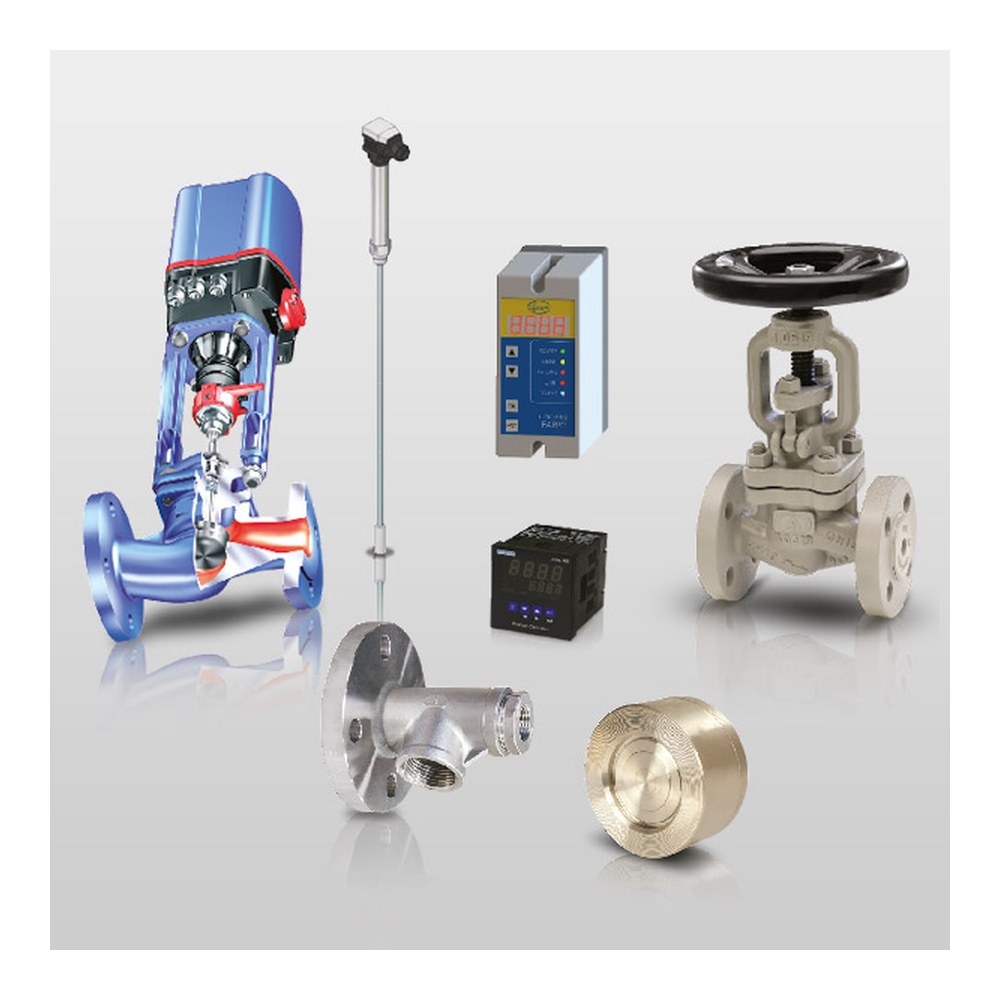
| Accessories | Controller per pump, jockey pump, gauges, valves, relief valve |
Układ odniesienia zestawu pomp pożarowych.
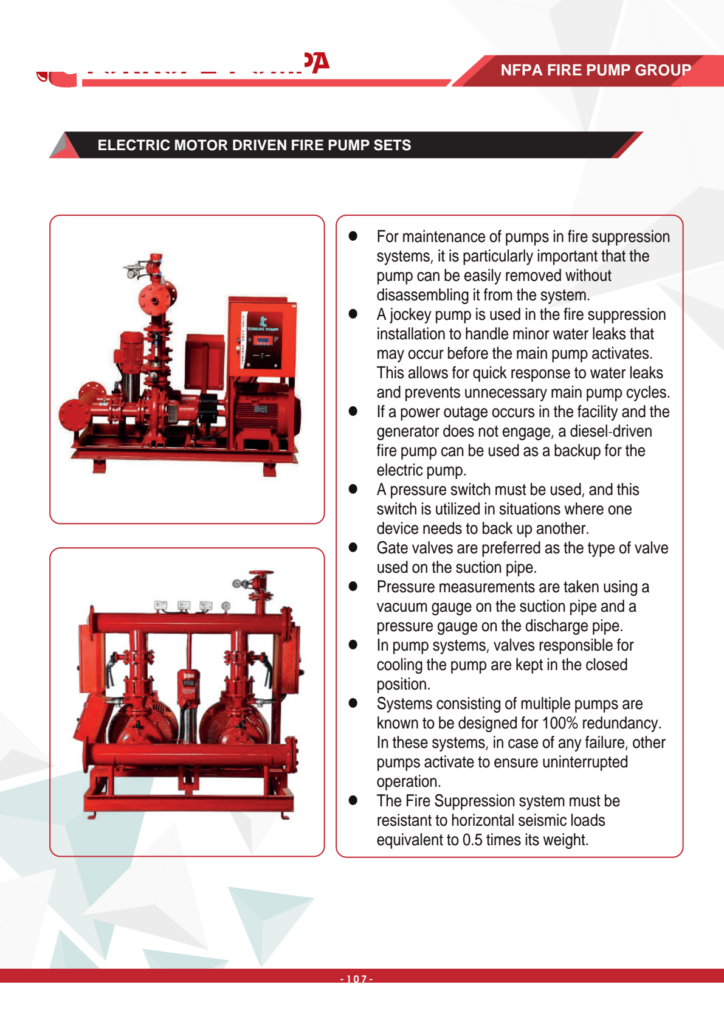
Układ konstrukcyjny zestawu pomp pożarowych.
Fire pump characteristic curves (NFPA 20)
Rated duty points follow NFPA 20 characteristic rules:
- Shut-off (Hmax) — pressure at zero flow shall not exceed 140% of rated pressure
- Rated point — rated flow Q and rated head Hm
- 150% of rated flow — pressure shall not fall below 65% of rated pressure
Według NFPA 20 katalogowe wydajności pomp pożarowych muszą odpowiadać znormalizowanym stopniom przepływu stosowanym w projektowaniu (dobór w ramach tych stopni zależy od projektu).
What to send for selection
- Required flow (gpm or m³/h) and pressure / head
- Electric and/or diesel driver preference
- Number of main pumps + jockey requirement
- Controller, valve and instrumentation scope
- Site power / fuel and redundancy concept
Share duty data via WhatsApp or the Request Form tab for a package proposal.
Prześlij wymagania projektu. Zespół odpowie doborem pompy.

